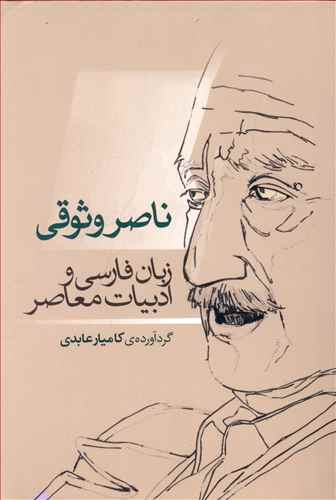
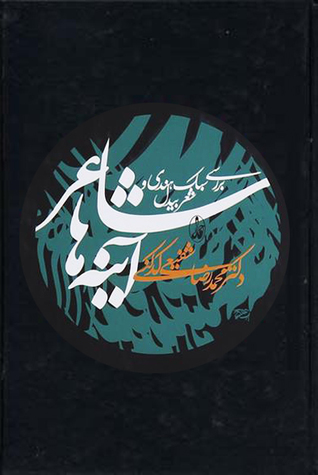
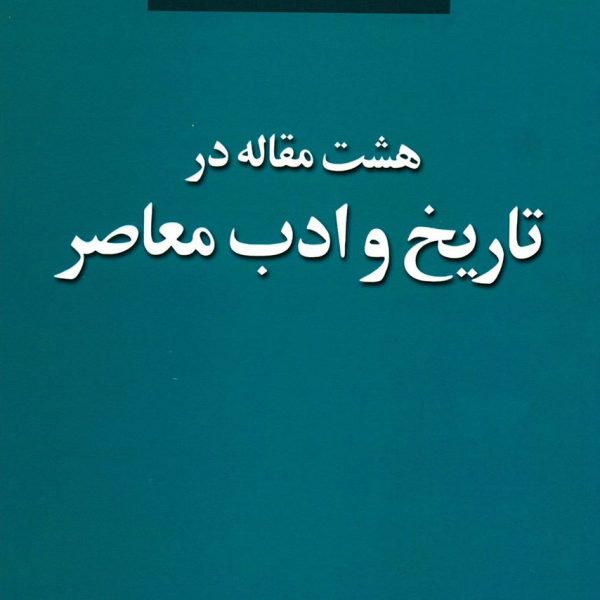
This book compiles ten essays on the Persian language and orthography and 13 essays on contemporary Iranian literature (including works by Nima Yooshij, Tondar Kia, Jalal Al-Ahmad, Shamloo, and others) covering the period from the 1960s to 2001. Naser Vosoughi had an interest in language and literature from adolescence. Due to his education at the American College of Alborz, where English was the language of instruction, he was very familiar with English; however, he also paid attention to his national language and literature. Political engagements in the 1940s and early 1950s limited his focus on language and literature. However, the publication “Andisheh va Honar” (Thought and Art) in 1954 provided him with an opportunity to engage in social and economic sciences while also addressing language and literature. This phase began more extensively in May 1962 with a new issue emphasizing that “Art is not only the highest form of human expression but also the path to salvation.” Vosoughi authored and translated works in social and economic sciences, carefully citing cultural sources. In the early 1960s, he felt that the conventional Persian language of the time was insufficient for these fields, prompting him to pursue innovation over late traditions. He studied both contemporary and ancient roots of the Persian language, drawing on the linguistic experiences of Ahmed Kasravi and Mohammad Moghadam. Terms like “Chapak” (publication) and “Tash” (form) exemplify his linguistic borrowings from these scholars. He revered Kasravi as a “memorable and true historian and linguist of Persian” and Moghadam as an “everlasting, Iran-philistine scholar and researcher of Iranian history.” After a brief period, Vosoughi embarked on independently equating specialized and semi-specialized foreign terms with Persian equivalents, creating his own linguistic set. His efforts to refine language by inventing or reviving vocabulary are significant. Concurrently, contemporaries such as Amirhossein Aryanpour and later Dariush Ashouri followed similar but politically varied paths. Many scholars and translators also experimented within this domain. Beyond vocabulary, Vosoughi showed innovation in Persian syntax, informed by spoken language and English, at times breaking conventional grammatical norms. He believed that new thinking and understanding the world required a new language. Although not all embraced these linguistic reforms, Vosoughi was unfazed by challenging the cultural-linguistic environment of his homeland, content with a small readership. His primary focus outside social and economic issues was language. Nevertheless, he maintained ties to contemporary literature due to his natural interest in breathing the culture of his time and familiarity with modern literary works. He was acquainted and friends with prominent poets and writers of his day, such as Sadegh Hedayat, Ebrahim Golestan, Simin Daneshvar, Jalal Al-Ahmad, Ahmad Shamloo, Mehdi Akhavan Sales, and Forough Farrokhzad. Collaborators like Shamim Bahar and Aydin Aghdashloo, along with several younger poets and writers, further enriched this list. The journal “Andisheh va Honar” from 1954 to 1974 prominently featured much of modern and contemporary Iranian literature, especially some essays.



Reviews
Clear filtersThere are no reviews yet.