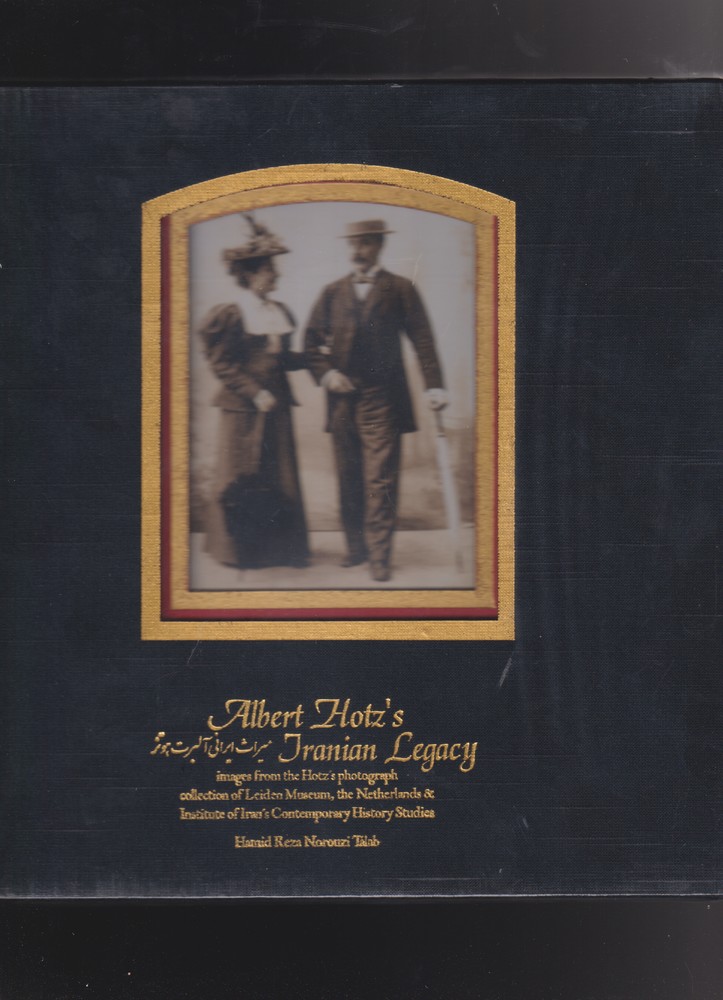
Most of the photographs of Iran found in the Netherlands belong to the collection of Albert Houtz (1855-1930). He was a Dutch merchant who, in 1874, in his youth, traveled to Iran to expand the commercial activities of his father’s company, Jack Houtz. Together with several Dutch and English merchants, he established a chain of trading houses in Isfahan, Shiraz, Bushehr, and Sultanabad (Arak). In 1891, Houtz began a seven-month journey during which he traveled in southern Iran from Bandar Abbas towards Bushehr and Kharg, then to Ahvaz and Shushtar, traveled overland to Dalki, Kazeroon, and Shiraz, visited Persepolis and Pasargadae, then Isfahan, and continued via Sultanabad and Qom to Tehran. From Tehran, he moved westwards to Tabriz, reached the Russian border, traveled through Yerevan and Tbilisi to the Caucasus, and then to Constantinople. The photo collection taken by Houtz in 1891 in Iran, Turkey, and the Caucasus made him the first Dutchman who, through his photographs, was able to document many diverse aspects of Iranian life. Houtz’s photos showcase ancient and historical monuments, the life of the people, islands, bridges, roads, rivers, and more, aiming to promote commercial opportunities in Iran. Houtz’s legacy in the Netherlands, besides his rich collection of photographs of Iran, includes a large collection of books, artworks, clothing, and utensils. His photo collection, most of which he personally took and some purchased from European and Iranian photographers, demonstrates his special interest in Iran.



Reviews
Clear filtersThere are no reviews yet.