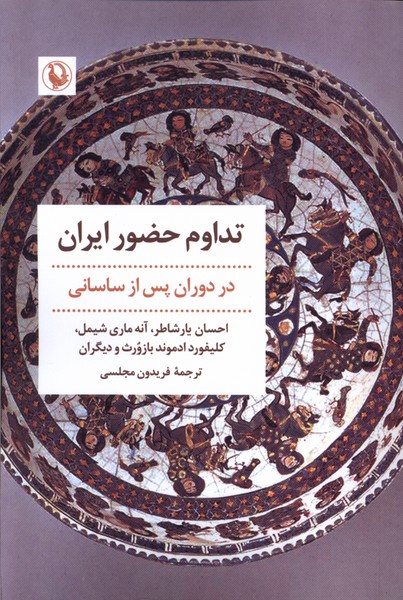
The book “The Continuity of Iran’s Presence: In the Post-Sasanian Era” explores and analyzes one of the fundamental questions of Iranian history: after the fall of the Sasanian Empire and the advent of Islam, what happened to that ancient civilization and its cultural structures? This work, which is a collection of essays by prominent researchers such as Ehsan Yarshater, Annemarie Schimmel, and Clifford Edmund Bosworth, avoids a simplistic answer of the complete elimination or replacement of Iranian culture. Instead, it discusses the complex process of synthesis and cultural growth. The authors argue that the political fall of the Sasanians did not mean the death of Iran’s cultural heritage. This legacy continued in various forms and became one of the main pillars shaping Islamic civilization. The book examines the roots of this interaction and shows that the presence and influence of Iranians in the Abbasid Caliphate’s administration, from bureaucracy and governance principles to courtly etiquette, reconstructed Sasanian models within a new framework. Meanwhile, the Persian language (Dari) was revived as the language of poetry and epic, with works such as the Shahnameh redefining Iranian identity within a new cultural context. The book also studies the role of Iranian scholars in the flourishing of sciences in the Islamic world. Figures like Ibn Sina, Razi, and Biruni, although writing mostly in Arabic, the scientific language of the time, were products of a rooted Iranian intellectual and cultural tradition. Alongside rational sciences, the book pays attention to the significant influence of Iranian mystical thoughts on the formation and enrichment of Islamic Sufism. The essays also address art fields, including painting and architecture, showing how Iranian aesthetic elements continued and blended with Islamic art. This collection of essays takes a non-one-sided view and also refers to the mutual influences of Iran and Islam. To better understand this relationship, it explores the presence and status of Arabs on Iran’s borders, even before the Sasanian period, demonstrating the long history of this interaction. Iran’s presence in the Islamic world, Persian loanwords in Arabic, and the widely accepted belief about Iran’s role in the Islamic world are among the important topics discussed in this book. Ultimately, “The Continuity of Iran’s Presence” provides a narrative of cultural transformation in which Iranian elements were absorbed and reproduced within the structure of Islamic civilization.




Reviews
Clear filtersThere are no reviews yet.