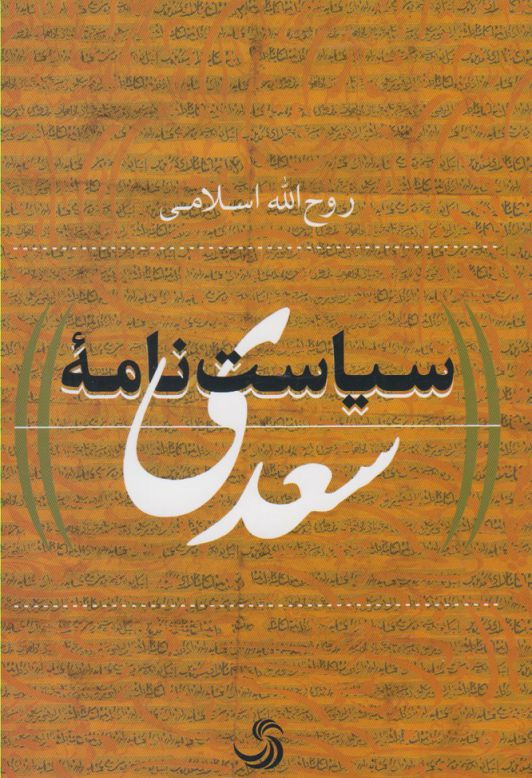
There are structures in life that occupy the mind, and thinking about the essence, challenges, and possibilities of these structures shapes the future of human societies. The Iranian tradition of writing advisory books or political treatises (Siyasatnameh) has a realistic and phenomenological approach to structures due to its utilization of ancient heritage and continuity in governance in medieval and modern Iran, offering strategic solutions through complex mechanisms. Saadi, a moderate, pragmatic, and realistic political writer in a crisis-ridden era, analyzes politics in his Golestan as the management of everyday structures. Viewing politics as the application of practical techniques, he attempts to realistically depict ethics as a position derived from wisdom and continued rationality in medieval Iran. Four everyday life structures — government and authority, wealth and livelihood, pleasure and instinct, and religion and law — are examined by Saadi in concise and wise language across three levels: essence and existence, diagnosis of problems, and proposing solutions. This book is a structuralist and critical interpretation of the Siyasatnameh in the tradition of Iranian political thought.




Reviews
Clear filtersThere are no reviews yet.