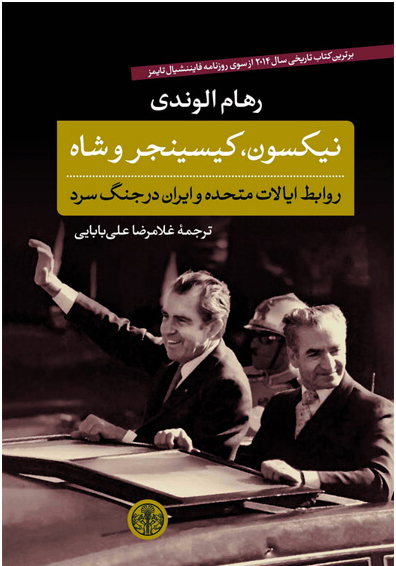
The book ‘Nixon, Kissinger, and the Shah: The United States and Iran in the Cold War’ by Roham Alvandi is a comprehensive examination of U.S.-Iran relations during Nixon’s administration. It focuses on the interactions between President Richard Nixon, his National Security Advisor Henry Kissinger, and the Shah of Iran, Mohammad Reza Pahlavi, during a critical period of the Cold War. Roham Alvandi, an Associate Professor of International History at the London School of Economics and Political Science (LSE), primarily researches Iranian history and foreign relations. The book first explores the strategic engagements between the U.S. and Iran solidified during Nixon’s presidency. Alvandi explains how Nixon and Kissinger viewed Iran as a crucial ally in the Middle East, capable of acting as a bulwark against Soviet influence in the region. The author examines the impact of the Nixon Doctrine on U.S.-Iran relations. Announced in 1969, this policy emphasized the need for U.S. allies to take greater responsibility for their own defense. This led to increased military and economic support for Iran, enabling the Shah to modernize his armed forces and expand his regional influence. The subsequent chapters highlight the personal diplomacy between Nixon, Kissinger, and the Shah, offering insights into their meetings and correspondences and showing how their relationships influenced political decisions. The Shah’s ambitions for regional dominance were often supported by Nixon and Kissinger, who saw him as a reliable partner. A significant portion of the book addresses U.S. economic and military aid to Iran. Alvandi details the extensive arms sales and financial assistance that bolstered the Shah’s regime, aiming to strengthen Iran’s military capabilities and assure its role as a regional power. In conclusion, Alvandi assesses the long-term implications of the Nixon-Kissinger-Shah relationship on U.S.-Iran relations and the Middle East more broadly. He argues that the policies and decisions made during this period had enduring consequences, eventually contributing to the Iranian Revolution in 1979 and the subsequent upheaval in U.S.-Iran relations.






Reviews
Clear filtersThere are no reviews yet.