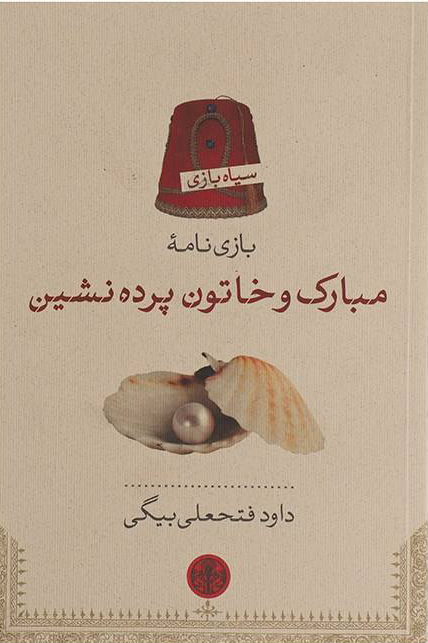
The book ‘Mubarak and the Veiled Lady’ by Davood Fathali Beighi is one of the prominent works in the field of traditional Iranian performances, written in the form of Siyah Bazi and Takht-Hawzi. This play, inspired by the tale of ‘The Virtuous Woman’ from Attar Neyshabouri’s ‘Elahi Nameh,’ narrates a moral and social story with a humorous and critical tone. The story is about Ghavam-uddin, a devout and faithful man intending to travel for pilgrimage. He entrusts his life’s affairs and shop to his younger brother, who betrays him and falls in love with his brother’s wife. This betrayal sets the stage for events portrayed humorously with the character ‘Mubarak.’ Siyah Bazi, the traditional theater format of this play, features two main archetypes: the ‘Haji’ or ruler and the ‘Siyah’ named ‘Mubarak,’ who acts as a servant. Siyah plays a beloved witty character criticizing societal conditions through humor and mockery. Improvisation, music, and dance are pivotal in this genre. The play uses a narrative style alternating between past and present. ‘Mubarak and the Veiled Lady’ was first written in 2006 and performed in notable venues in subsequent years, receiving widespread acclaim. Davood Fathali Beighi, a distinguished writer and director of traditional Iranian theater, aims to revive and preserve Iran’s ritualistic and traditional art forms through this work, combining elements like Siyah Bazi, ancient stories, and live music. The play offers a mix of humor, social critique, and moral teachings in a sweet traditional language, reflecting Iranian culture and heritage while attempting to safeguard its classic theater art forms.




Reviews
Clear filtersThere are no reviews yet.