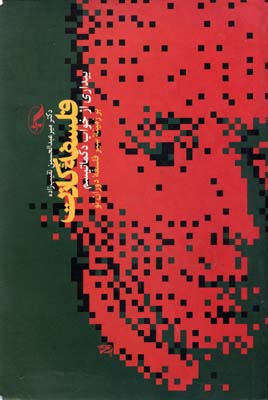
The book “Kant’s Philosophy” by Mir Abdolhossein Naqibzade Jalali is a rich and scholarly effort to revisit Immanuel Kant’s critical system, focusing on the rupture he created at the heart of modern rationalism. The author examines Kant’s three main critiques—the Critique of Pure Reason, the Critique of Practical Reason, and the Critique of Judgment—not merely as separate steps but as interconnected links in a philosophical project aiming to awaken reason from the Cartesian slumber in which the knowing subject imagines itself the unquestioned ruler of the world. The book begins with the premise that Kant’s epistemological revolution—what he himself called the “Copernican Revolution”—is a fundamental transformation in understanding the relationship between humans and the world. Instead of reason seeking to discover an external, independent reality, it is reason itself, through its a priori structures, that makes experience and knowledge possible. Naqibzade clearly shows in his analysis of the “Critique of Pure Reason” how Kant draws a distinct boundary between phenomena and noumena, delineating what can be known from what can only be thought. Here, philosophy becomes reflective: a return of reason to itself to define its limits and possibilities. The book then moves into the “Critique of Practical Reason,” where Kant grounds ethics not in utility or consequence but in the command of reason itself. The author carefully illustrates how Kant elevates ethics beyond theoretical reason to a higher level. The concept of the “categorical imperative”—acting only on maxims that could become universal law—is explained as the embodiment of reason’s autonomy in will and action. Kant’s departure from Descartes lies here: while Descartes begins with doubt and arrives at certainty, Kant begins with responsibility and arrives at freedom. For Kant, ethics is not the product of calculating reason but the expression of human dignity as self-legislator. The third part, the “Critique of Judgment,” delicately links theoretical and practical reason. Naqibzade views this section not simply as an exposition of Kantian aesthetics but as a necessary phase in completing the critical project. Aesthetic experience, based on the faculty of judgment, is a form of free reflection within the realm of possibilities, where the subject learns to think meaningfully without predetermined rules. Here, beauty manifests freedom—not conceptually but emotionally—and the aesthetic judgment assumes a mediating role between knowledge and ethics. A distinctive feature of the book is the use of diagrams and conceptual tables to explain the complex structure of Kant’s three critiques. The author also introduces diverse interpretations by post-Kantian thinkers—from Hegel and Schelling to Adorno and Habermas—and engages them in dialogue that clarifies the place of critical philosophy in contemporary thought. “Kant’s Philosophy” opens a new window for students, researchers, and all interested in modern thought to reflect on reason, ethics, and beauty in a world where questions about “What can I know?”, “What should I do?”, and “What may I hope for?” remain vital.









Reviews
Clear filtersThere are no reviews yet.