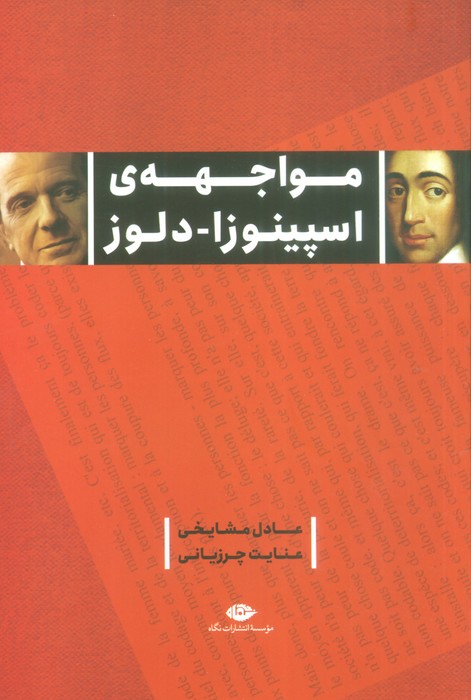
The book “Encounter of Spinoza-Deleuze,” written by Adel Moshayekhi and Enayat Cherziani, examines the influences of Spinoza’s philosophy on Gilles Deleuze’s thought. This book comprehensively and precisely investigates the key ideas and concepts of both philosophers and demonstrates how Spinoza’s thoughts and theories have been one of the main inspirational sources for Deleuze’s philosophical analyses. Baruch Spinoza (1632-1677) is one of the most prominent philosophers of the modern era. He is known for his metaphysical, ethical, and theological theories. In his most important work, “Ethics,” he addresses the concepts of God, nature, humanity, and freedom. Spinoza believed that God and nature are one, and everything in the world is determined by the necessary and rational laws of nature. On the other hand, Gilles Deleuze (1925-1995) is a contemporary French philosopher whose works have influenced philosophy, cinema, literature, and art. Deleuze is especially known for his works in continental philosophy, postmodernism, and theoretical analyses. He extensively drew inspiration from Spinoza’s thoughts and explored concepts such as substance, modes, and ethical and political systems. One of the main goals of the book “Encounter of Spinoza-Deleuze” is to explore the points of convergence and divergence between these two philosophers. Through a meticulous examination of both philosophers’ works and writings, the authors attempt to show how Deleuze used Spinoza’s concepts and ideas to develop his own theories. At the same time, the authors analyze points of difference and show how Deleuze reinterpreted some of Spinoza’s concepts and presented them in a new way. For example, one of the key concepts in Spinoza’s philosophy is the notion of “substance” and “modes of substance.” Spinoza believed that there is only one substance, which is God or nature, and everything else is a mode of this substance. Deleuze reinterprets this concept in a new way and employs it as a basis for his own philosophical theories in existence and truth. Overall, this book not only examines Spinoza’s influences on Deleuze but also analyzes their similarities and differences and demonstrates how Spinoza’s concepts and ideas contributed to the formation of Deleuze’s philosophical theories. This book can serve as a valuable resource for researchers, students, and enthusiasts of Spinoza’s and Deleuze’s philosophy.








Reviews
Clear filtersThere are no reviews yet.