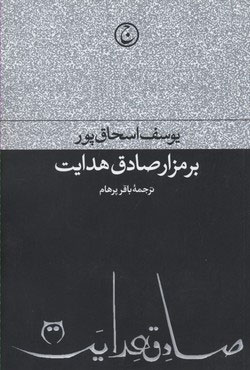
There are those who start to waste away from the age of twenty. These are the words of Sadegh Hedayat, the greatest writer of modern Iran, who precisely described this wasting away. The incurable pessimism that drove him to commit suicide in 1951 in Paris after a painful life was more than just his own existence. He considered himself a “double-edged sword,” a person “born mistakenly, staying here and driven away there.” This “sword,” like his own life and modern Iran, was suspended on a borderline, hanging between East and West. Hedayat was a writer of the period of Iran’s modernization, an unavoidable modernization. Modernity upturned all life in the East. Its political and historical result in Iran was the Constitutional Revolution: the people wanted freedom, the rule of law, and the establishment of a national state; they wanted order against the existing disorder, chaos, and arbitrariness. Reza Shah created a national state, a legal apparatus, and order, but in the form of Eastern despotism. However, what was not achieved was freedom, and Sadegh Hedayat’s fate, according to Shahrokh Maskoub, was among the consequences of this failure to realize freedom.



Reviews
Clear filtersThere are no reviews yet.