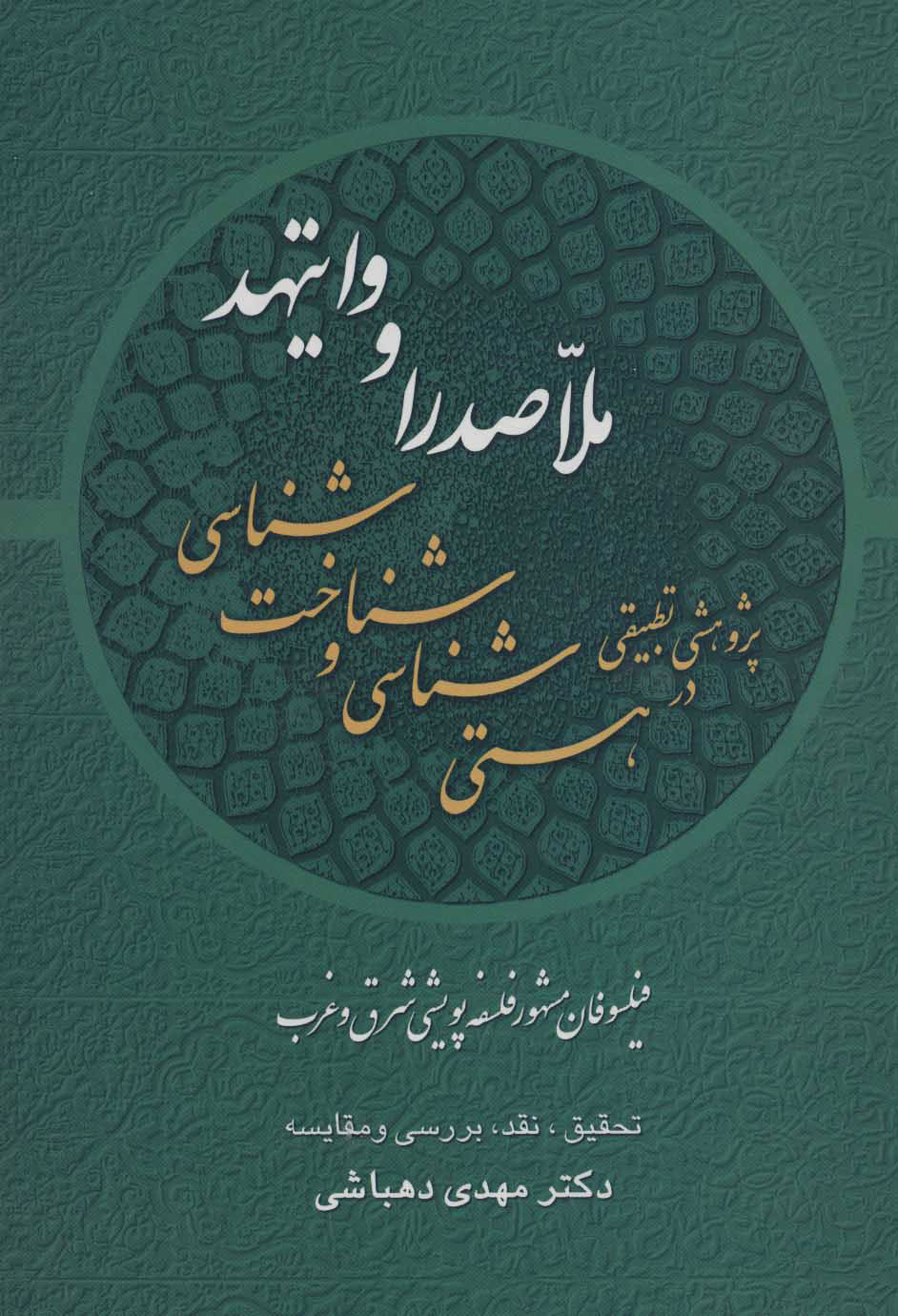
Mulla Sadra’s philosophy is the only dynamic philosophy in Islamic philosophy and for this reason, he can be called the philosopher of transformations and substantial motions. The foundations of Mulla Sadra’s dynamic philosophy can be summarized as follows: the primacy of existence (objective and real); the unity of existence (generic and personal); gradation in levels of existence; the principle of the simplicity of the ultimate truth of all things; intensifying motion and substantial motion; and the theory of space and time. Whitehead, a British philosopher, mathematician, and logician, made significant efforts to develop a physical system based on scientific cosmology. Whitehead’s four philosophical topics are: the theory of creative process; the theory of actual entities; the theory of perception; and the integration of subject-object duality. An overall review of the common aspects of Whitehead’s and Mulla Sadra’s epistemological theories leads to such conclusions: for Mulla Sadra, perception and knowledge are identical, and perceptions are applied to imaginative and sensory perceptions. Whitehead also considers knowledge and perception to be the same; due to the dynamic and fluid nature of material phenomena, the real known object cannot be identical with material phenomena. Therefore, both philosophers regard unity as a condition for any form of cognition and based on their philosophical structures, they emphasize the creativity of the mind in producing multiplicities and proliferating unities in different ways; no real phenomenon has the same and identical experiences compared to other phenomena (Whitehead), and the divine emanation is not repetitive, and at every moment, a particular rank and emanation manifest in the world (Mulla Sadra). The author in this book seeks to examine the dynamic philosophy of Mulla Sadra and Whitehead only in two categories: ontology and epistemology, shows their similarities and differences, and comparatively analyzes their philosophical topics.









Reviews
Clear filtersThere are no reviews yet.