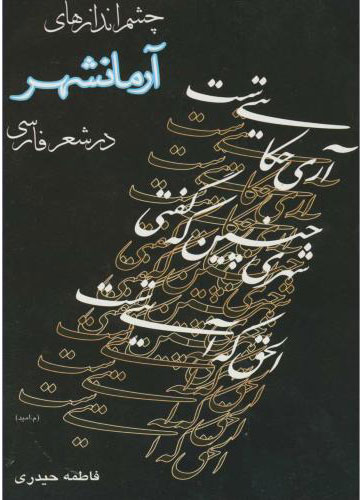
A utopia is a society where everything aligns perfectly with desires; a society free from oppression, discrimination, war, strife, ignorance, violence, and disease. Its members have achieved scientific and practical perfection, freed from selfish desires, essentially an imaginary society where its people live in ideal conditions governed solely by good and happiness. This hypothetical government is called ‘Utopia’ in Latin, ‘Madīnat al-Fāḍilah’ in Arabic, and ‘Armaneshahr’ in Persian culture. This book is the author’s master’s thesis, divided into two main parts. The first part discusses Plato as the first theorist of utopia and his thoughts on the ideal city, followed by Aristotle’s views on politics. It then examines ideal governments and golden ages in Iran’s mythical and historical eras, and explores the ideal city in the works of renowned Iranian sages and philosophers. One chapter reviews works created based on utopian ideas inside and outside Iran, introducing many domestic and foreign books centered around utopia. The next chapter presents figures in mythology and history who have attempted to build earthly paradises (ideal cities). The final chapter of this section evaluates the promised universal government as the supreme model of ideal governance in various religions. The second part analyzes the works of four poets—Nizami, Attar, Saadi, and Jami—referring to their conception of utopia in relation to the utopias of Plato and Farabi, two foreign and Iranian theorists of utopia. It also highlights the similarities and differences between the utopias envisioned by these poets and those of Plato and Farabi.




Reviews
Clear filtersThere are no reviews yet.