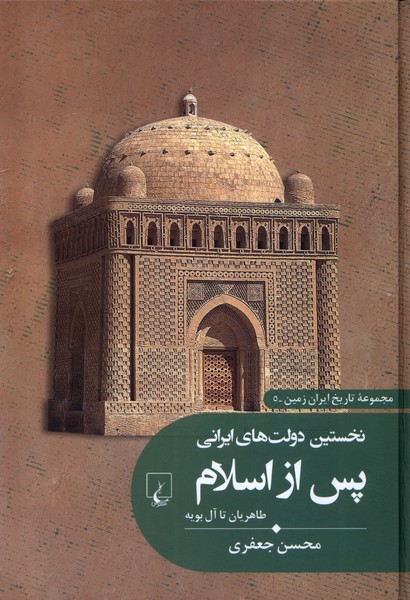
The book The First Iranian States After Islam by Mohsen Jafari examines the history of Iran in the first four centuries after the arrival of Islam and explores the factors that preserved the cultural and linguistic identity of Iranians against Arab culture and language. This book is the fifth volume in the “History of the Iranian Land” series. The Arab Muslim conquests in the seventh century AD were among the most significant and influential events in world history. In a short period, they defeated two powerful empires—the Sasanian and Eastern Roman (Byzantine)—and captured a vast territory from Khorasan to Morocco. Following these conquests, the religious and cultural status of these lands underwent fundamental changes that permanently transformed their historical fate. Although most Arab caliphs, especially the Umayyads, were not strongly focused on spreading Islam, their policy of relocating Arabs to conquered lands and culturally humiliating the defeated peoples facilitated the spread of Arabic language and culture. As a result, the inhabitants of ancient civilizations in areas such as present-day Iraq, Syria, Egypt, Libya, and Tunisia lost their ancient cultural identities and became Arabized linguistically and culturally. Iran was the only ancient civilization that, during the first two centuries after Islam, was part of the caliphate yet is not part of the Arab world today. The Iranian people have maintained strong ties to their ancient identity, with Persian remaining their administrative, educational, and cultural language. This remarkable exception has raised many historical questions. The book contains nine chapters, including “Iranian Land in the Caliphate Realm,” “The Tahirids, the First Iranian State After Islam,” “The Saffarids, the Native Sons of Sistan,” “The Samanids and the Cultural Renaissance of Iranian Land,” “The Ziyarids, the Unsuccessful Warriors,” “The Buyids, the Shiites of Daylam,” “New Persian Language (Dari), from Emergence to Flourishing,” “Culture and Civilization in the Era of the First Iranian States,” and “Architecture and Art in the Era of the First Iranian States.” This book attempts, by examining Iran’s history in the first four centuries after Islam—especially during the reigns of Iranian states—to answer important questions: Why did Iranians accept Islam but not Arab language and culture? How did Iranian culture survive against Arab culture? How did Persian emerge from under the shadow of Arabic? And most importantly, what factors enabled Iranians to remain Iranian while other ancient peoples became Arabized? Throughout its chapters, the book discusses the Arab caliphates’ rule, Iranian political-cultural movements, the rise of Iranian states and their role in political-cultural independence, the emergence of New Persian and its challenges with Arabic, and the cultural-artistic achievements of these Iranian states. The ultimate goal of the book is to find answers to major historical questions regarding the preservation of Iranian identity. The First Iranian States After Islam is an analytical, concise, and research-based work that studies one of the most important periods in Iranian history, making it a valuable and engaging resource for those interested in Iranian history and the history of Islamic lands.





Reviews
Clear filtersThere are no reviews yet.