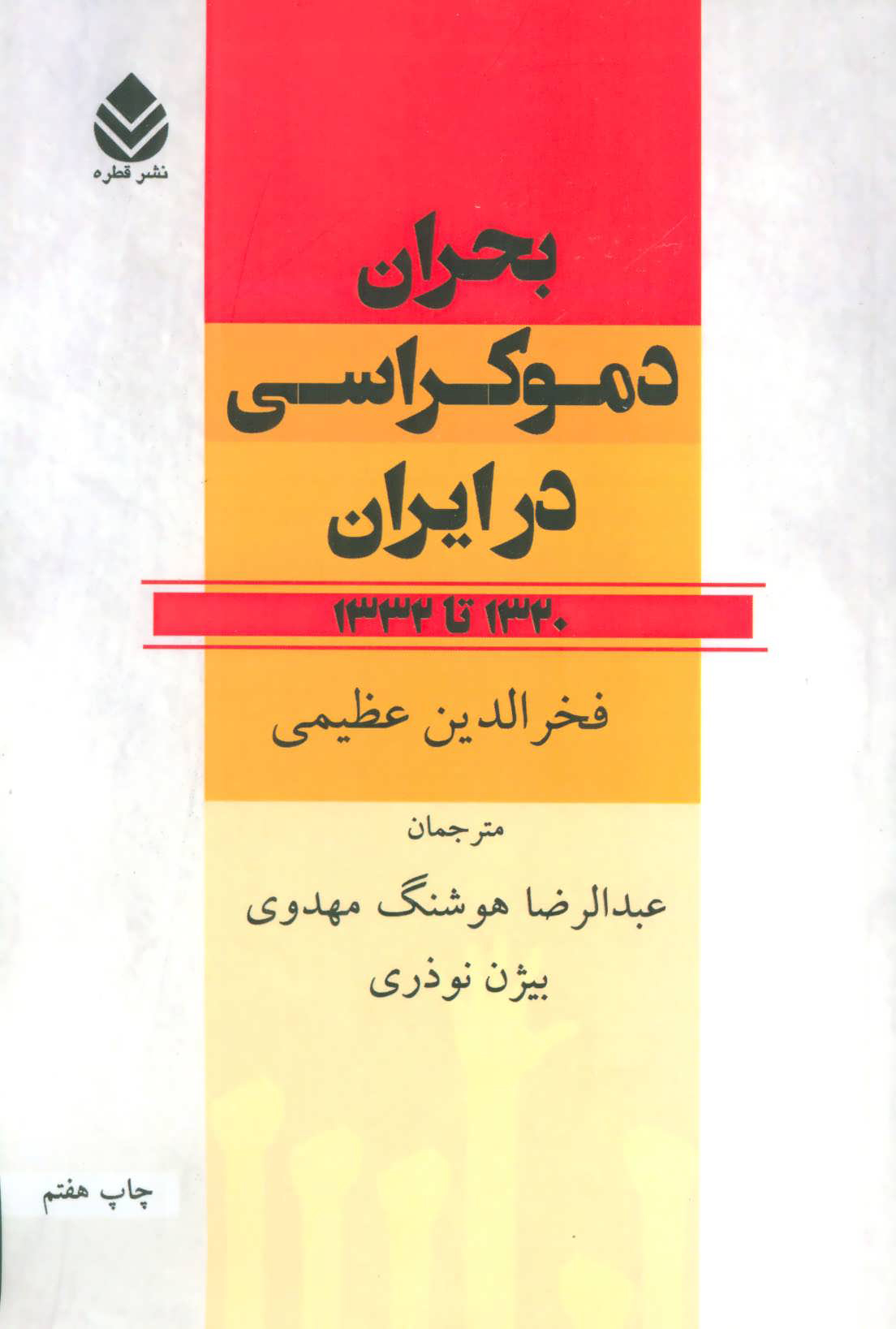
The book at hand is a work by Fakhruddin Azimi that examines ‘The Crisis of Democracy in Iran’ between 1941 and 1953. In 1941, Iran was occupied by Britain and Russia, leading to the abdication of the authoritarian Reza Shah under British pressure. This marked one of the most turbulent periods in modern Iranian political history, characterized by political instability and a proliferation of factions and organizations ranging ideologically from communist left to religious right. Fakhruddin Azimi aims to describe a complex set of factors, including constitutional rules and restrictions, that prevented the emergence and development of a stable parliamentary government in Iran during the period between Reza Shah’s abdication in September 1941 and the fall of Dr. Mossadegh’s government in August 1953. The scenario created by these conditions placed Iran in a chronic and simultaneously divisive impasse, exposing numerous political crises. ‘The Crisis of Democracy in Iran’ is the first detailed study, also published in English, providing remarkable new details about the conflicts and scheming that characterized this period. It seeks to explain why Iran’s longest experience with parliamentary democracy was ultimately doomed to failure. Authoritarianism and the lack of a true civil society stemming from the failures of this period contributed to the persistent problems that Iran faces to this day. This study is unparalleled in its breadth and depth of subject matter, as well as its extensive use of Persian and other language sources.






Reviews
Clear filtersThere are no reviews yet.