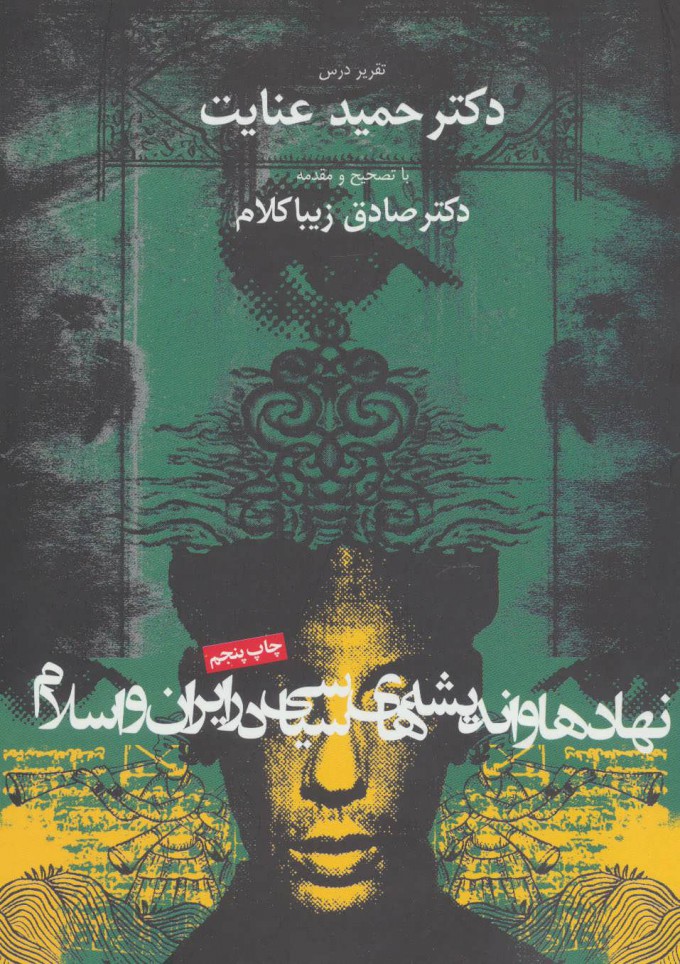
The book “Institutions and Political Thoughts in Iran and Islam” is essentially the lecture notes of the late Hamid Enayat for teaching the course “Political Thoughts in Iran and Islam.” These notes examine the social and political organizations of ancient Iran. The book “Institutions and Political Thoughts in Iran and Islam” covers topics such as how governments were formed, the structure of these governments, and how their powers and duties were delineated. Other topics in the first section of the book include discussions on Zoroastrianism, its relationship with political power, the movements of Mazdak and Mani, and an examination of their views. Another section deals with the historiography methods of Muslims, comparing and contrasting them with historians before Islam. Enayat aims to show particularly in this section how Iranian historians post-Islam tried to link the elements of Iranian identity and Islam and integrate these two. The second part of the book “Institutions and Political Thoughts in Iran and Islam” discusses political thought in Islam. In this section, the quality of work clearly increases as Enayat delves into his primary area of expertise, examining and introducing political opinions among various Islamic sects and Muslim thinkers with skill and in a clear and fluent style. The third section of the notes is essentially a detailed appendix concerning some of the terms and social classifications of pre-Islamic Iran. These appendices mainly include translations of sections from “Gevinden Gren’s” article on Iranian feudalism, to which the late Hamid Enayat occasionally added his own content. Unfortunately, this section is incomplete. However, since this part primarily provides technical information and familiarizes readers with terminology, it does not significantly harm the core of the notes.






Reviews
Clear filtersThere are no reviews yet.