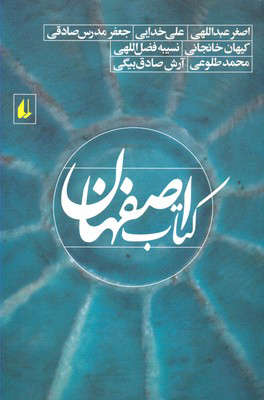
In the works of some prominent authors, cities become a significant element and sometimes gain a character-like presence within the narratives. For example, Saint Petersburg in Dostoevsky’s works or Dublin in James Joyce’s writings are prime examples. Similarly, the city of Ahvaz in the works of Iranian author Ahmad Mahmoud carries such a presence. Recently, literary critics have emphasized the setting of Iranian stories, as each city has its unique culture, language, customs, social and economic relations, all of which can provide a compelling backdrop for storytelling. Consequently, writing city-centered narratives has become popular in modern Iranian literature. ‘Isfahan Book’ is one such example. As its title suggests, the city of Isfahan forms the axis of the narrative events. ‘Isfahan Book’ is a collection of stories, each written by a different author. Notable authors like Ali Khodai, Jafar Modarres Sadeghi, and Asghar Abdollahi are grouped with younger writers like Mohammad Tolouei and Arash Sadeghbeigi. This collection, compiled by Mohammad Tolouei, contains seven stories: ‘A Piece of Miniature’ by Asghar Abdollahi, ‘Wall Writings’ by Ali Khodai, ‘Shahram and Shahriar’ by Jafar Modarres Sadeghi, ‘Yahya of Zayanderud’ by Keyhan Khanjani, ‘Mother Cat’ by Nasibe Fazlollahi, ‘The Living of Isfahan’ by Mohammad Tolouei, and ‘From Our Side’ by Arash Sadeghbeigi. The connection between the city and its people, along with the social and cultural aspects of life in Isfahan, is vividly depicted in these stories. The characters seek identities that have been fractured and transformed over centuries. This concept is visually represented in ‘Wall Writings’ by Ali Khodai, whose main character surrounds themselves with photos of Isfahan to recreate an unaltered and undivided version of the city. This theme resonates throughout the collection, portraying the deep bond between people and their surroundings as their fates intertwine with the city of Isfahan. In ‘Shahram and Shahriar’ by Jafar Modarres Sadeghi, the fragmented identity is explored differently. ‘Isfahan Book’ is likely to captivate enthusiasts of Iranian short stories, while devotees of Isfahan may find themselves embarking on a dreamlike and imaginative journey through these tales.





Reviews
Clear filtersThere are no reviews yet.