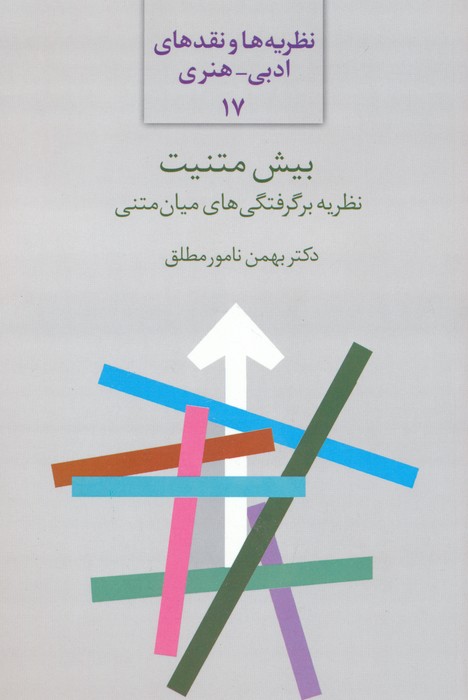
The book “Hypertextuality: The Theory of Intertextual Borrowings” by Bahman Namvar Motlagh is a scholarly work in the field of literary criticism that examines the interaction between texts and how previous texts influence new ones. Rooted in the theories of thinkers such as Julia Kristeva, Gerard Genette, and Jacques Derrida, this book introduces the concept of hypertextuality as a dynamic process of meaning-making. Namvar Motlagh demonstrates that literary and cultural texts do not acquire meaning independently but always form their meaning and identity in relation to other texts. According to the author, hypertextuality is a type of intertextual borrowing where a text creates new meanings by altering, recreating, and combining elements of previous texts. Contrary to the common perception that intertextuality is merely imitation or adaptation, Namvar Motlagh treats this process as a creative and innovative act. He shows that literary works, even when seemingly independent, exist in a network of references, inspirations, and reinterpretations linking them to earlier texts. The book is organized into two main sections: the first addresses the theoretical foundations of hypertextuality, reviewing the opinions of critics and literary theorists to analyze intertextuality from various perspectives and proposing hypertextuality as a level beyond intertextuality where elements of one text not only appear in another but also undergo structural and semantic transformations. In the second section, Namvar Motlagh explores the application of hypertextuality in textual analysis, providing examples from literary works to demonstrate how new texts transform previous ones and generate new meanings. His analyses reveal that hypertextuality plays a role not only in literature but also in fields such as cinema, visual arts, and even digital media. He argues that in the information and communication era, texts are continuously being recombined and no work is entirely independent of others. Among the book’s strengths are its comprehensive theoretical framework and precise analyses, making it an important resource for intertextual and literary criticism studies. However, the book’s specialized language and technical terminology might make some discussions challenging for non-specialist readers. Overall, this book is a valuable resource for researchers, literature students, and text theorists, aiding in a better understanding of intertextual mechanisms and the dynamics of meaning in literary texts.






Reviews
Clear filtersThere are no reviews yet.