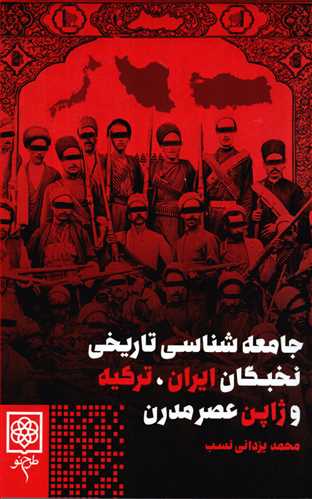
A brief look at the history of social and political changes in human societies reveals multiple factors responsible for these transformations. These include governmental and political system errors, adverse economic conditions, foreign interventions, rulers’ ability to persuade the masses, and the emergence of charismatic leaders. Among these, the most crucial element in historical and social changes across regions is the elites’ support or opposition to these developments and their biases toward contemporary transformations. Throughout human history, change starts not with classes or individuals but with elites, whose conflicts create the grounds for societal change. In this regard, Iran stands out as a region where elites have played a significant role in major social events and political changes, with their conflicts often leading to decisive outcomes. Therefore, understanding the presence and performance of elites in Iran requires precise and thorough research. The book “Historical Sociology of Elites in Iran, Turkey, and Japan in the Modern Era” by Mohammad Yazdani-Nasab, a social sciences researcher and professor, is a highly credible and suitable source for this purpose. The author initially explains that in most contemporary Iranian historical studies, elites have been viewed separately rather than as a coherent elite group rooted in existing social contexts. Relationships among elites have often been reduced to conflicts of interest, neglecting the ideological conflicts among various elite groups, which have been a prominent aspect of elite disputes in modern Iran and have frequently shaped the country’s future through critical historical junctures. Subsequently, the author attempts to identify different elite groups in Iran between the two revolutions by considering multiple sources of elite power and their resulting structures, clarifying their relationships, and comparing them with Turkey and Japan to highlight the importance of ideological conflicts among elites in modern Iran. This approach also sheds light on the different paths these countries have taken in their processes of change and transformation. Due to its substantial content and fluent writing style, this book is highly beneficial both for humanities researchers and enthusiasts interested in this field.





Reviews
Clear filtersThere are no reviews yet.