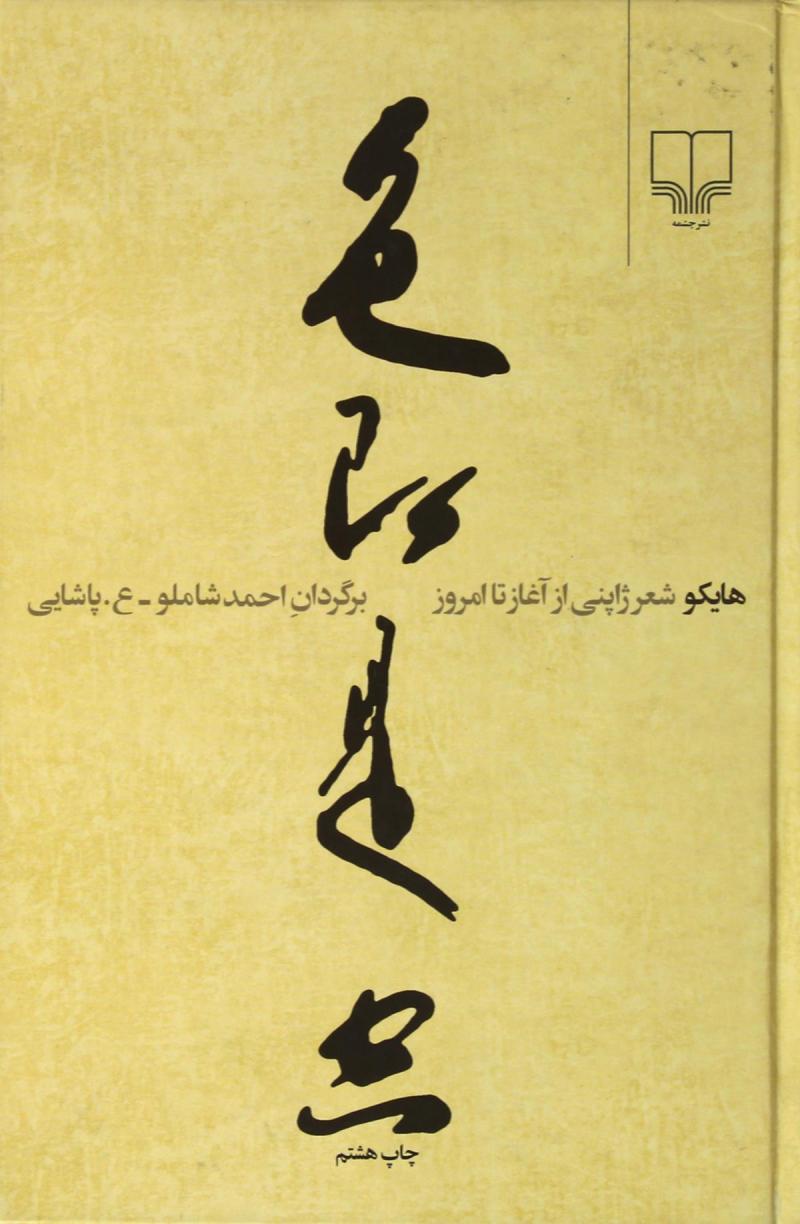
Haiku is essentially a poetic style that originated in Japan. Haiku is a short poem, and it usually aims to create an image of nature in the reader’s mind. In this type of poetry, unlike Persian poetry, language is merely a medium for conveying concepts; in Persian poetry, language itself is a significant part of the poem and is adorned with literary devices. Haiku, however, lacks linguistic embellishments. The poet seeks to capture a pure moment, a special moment that transcends language—a moment of existence. Every haiku consists of 17 syllables or morae, with 5 syllables in the first line, 7 syllables in the second line, and 5 syllables in the third line. However, this division is more prevalent outside Japan for ease, as in Japan, haiku is usually written in a single line. It can be said that haiku was introduced in Iran through Shamlu’s book, but the first person to translate haiku into Persian was Sohrab Sepehri, who gave rhythm to the haiku. In his book, Shamlu attempts to gather the best haikus. Additionally, he analyzes and examines the hidden meanings in haikus, helping the reader establish a stronger connection with the poem. More than 4,000 haikus were translated by Pashaei, and Shamlu selected around 1,400 haikus that could be published in Persian.






Reviews
Clear filtersThere are no reviews yet.