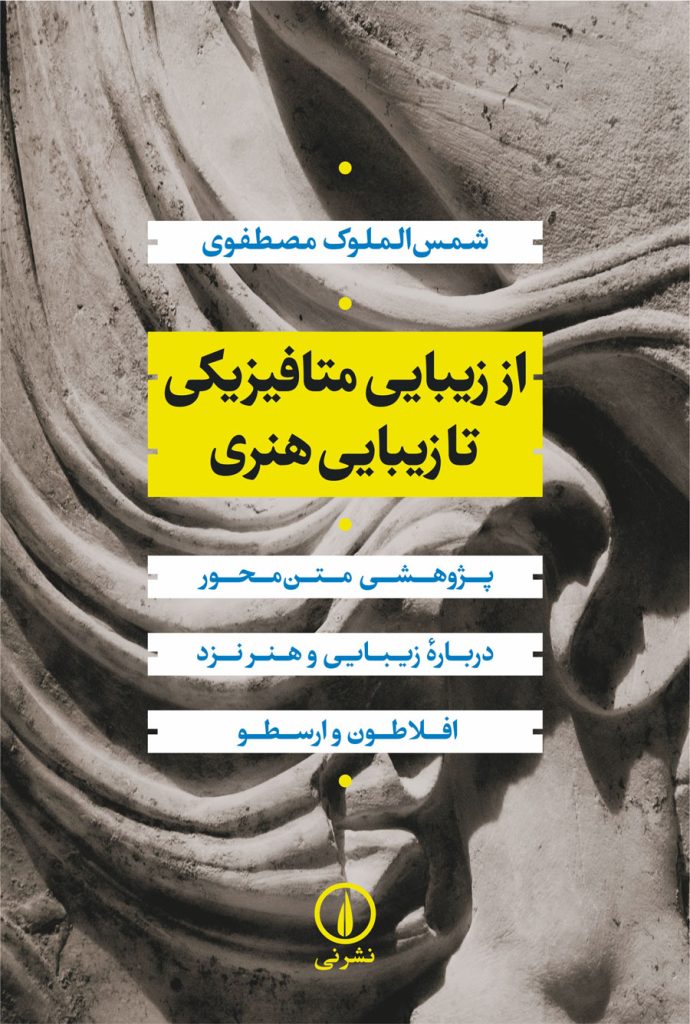
From Metaphysical Beauty to Artistic Beauty is a work by Shamsolmolk Mostafavi, published by Ney Publishing in a pocket-sized format with a softcover. This book is a comprehensive and historical study that examines the concept of “beauty” in the two domains of metaphysics (the philosophy of the supernatural) and art. After providing a philosophical introduction to the nature of beauty, Mostafavi investigates the evolution of this concept from ancient to contemporary thought, exploring the connections between metaphysical views of beauty and their artistic manifestations in Iranian-Islamic and Western cultures. Part One: Metaphysical Foundations of Beauty In this section, the author reviews classical definitions of beauty from the perspectives of Aristotle and Plato, then moves on to the theories of Islamic philosophers such as Farabi, Avicenna, and Mulla Sadra. Mostafavi shows that in Islamic metaphysics, beauty is understood as the manifestation of the name “Jamal” (Beauty) and an expression of the divine truth in the created world. He concludes with an analysis of the philosophical ruptures and developments that led to a modern outlook on beauty. Part Two: Beauty in Art Theories Here, Mostafavi begins with the aesthetic theories of Kant and Hegel, then discusses various movements such as Romanticism, Realism, Modernism, and Postmodernism, examining how each influences artistic forms and the criteria of artistic value. Part Three: The Link Between Metaphysics and Art in the Iranian-Islamic Tradition In this chapter, Mostafavi analyzes manifestations of metaphysical beauty in traditional Iranian arts like architecture, calligraphy, and miniature painting. He demonstrates how geometric proportions, light, color, and symbolism in these arts have roots in philosophical theories such as the “Unity of Being” and the “Manifestation of Divine Beauty.” Part Four: Comparative Studies The final section of the book is devoted to comparing the aesthetics of art in Iranian-Islamic and contemporary Western cultures. Mostafavi examines contemporary artworks from both cultures and shows that despite apparent differences, they share common metaphysical origins—such as the search for harmony and light. This book stands out with its unique features and innovations: a precise and coherent linkage between metaphysical philosophy and art theory rarely seen in similar Persian works; a historical and conceptual analysis from Aristotle to Postmodernism incorporating references to classical and contemporary sources; and visual examples from Iranian-Islamic and contemporary Western art that facilitate understanding of the theories for readers. Moreover, the book uses accessible language for non-specialists while maintaining conceptual depth and philosophical complexity. It is also valuable for a broad audience: students and researchers of philosophy and aesthetics interested in the intersection of philosophy and art, artists and art critics seeking to understand metaphysical roots of beauty, and curious readers who want to know why they are amazed by beautiful artworks and how this feeling has developed throughout history.




Reviews
Clear filtersThere are no reviews yet.