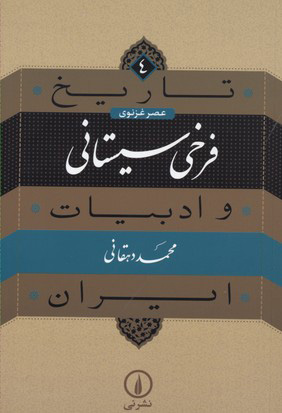
The book ‘Farrukhi Sistani,’ authored by Mohammad Dehghani, is the fourth volume in the series ‘History and Literature of Iran’ (published by Nashr Ney) and focuses on the life, times, and poetry of one of the most brilliant poets of the fifth century AH. This work, with an analytical approach and based on historical and textual data, aims to reconstruct the image of Farrukhi not just as a court poet but as a literary voice embedded in a complex political structure. Dehghani examines the political and cultural conditions of the Ghaznavid era, particularly during the reigns of Mahmud and Masud Ghaznavi, and demonstrates how this historical context influenced the formation and evolution of Farrukhi’s poetry. Through this analysis, Farrukhi is portrayed not merely as a court panegyrist but as a politically astute poet who navigated the codes of power skillfully. In his poetry, he strikes a delicate and calculated balance between praising power and reflecting the often harsh realities of the court. The book includes an analytical introduction and a selection of Farrukhi’s poems, primarily focusing on his panegyric odes. However, Dehghani’s perceptive selection reveals that these poems are not mere conventional praises but contain layers of conflict, doubt, linguistic refinement, and an awareness of power’s instability. While Farrukhi’s language is ornate and formal, it also sometimes transcends formal frameworks to uncover hidden truths. Another valuable aspect of this book is its focus on the connection between poetry and politics during the Ghaznavid period, a subject seldom explored in general histories of literature. Using credible historical sources, Dehghani elucidates the social and political contexts, offering readers insight not only into the poet’s life but also into the broader cultural and power-driven atmosphere of that era. ‘Farrukhi Sistani’ is not only a successful attempt to reexamine a crucial literary figure but also an effort to question the relationship between Persian poetry and power, flattery, truth, and history. It serves as a thought-provoking and enlightening resource for enthusiasts of classical Persian literature, the political-cultural history of Iran, and the study of the interplay between poetry and ideology.



Reviews
Clear filtersThere are no reviews yet.