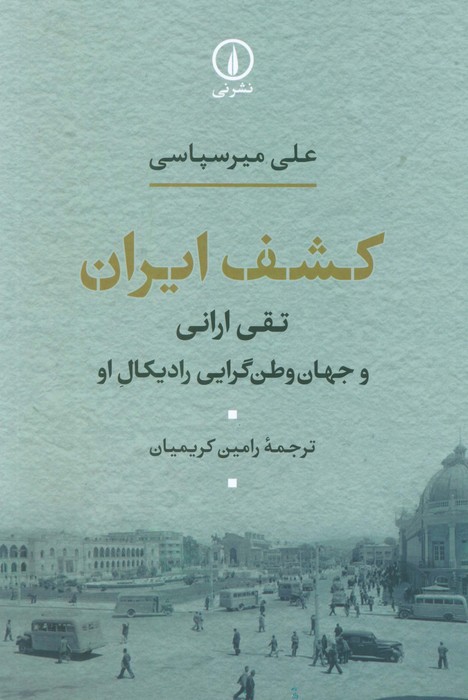
The book “Discovery of Iran: Taghi Erani and His Radical Cosmopolitanism” by Ali Mirsepassi is a precise and enlightening exploration of a figure largely overlooked in the historiography of modern Iran: Taghi Erani. Published in 2021 by Harvard University Press, the book offers a profound intellectual biography of Erani – a chemist, political thinker, and editor of the influential magazine “Donya” – whose life and thought marked a defining moment in the formation of Iranian modernity in the early twentieth century. Through meticulous archival research and a sharp theoretical perspective, Mirsepassi reintroduces Erani as a significant interlocutor in global currents of Marxism, cosmopolitanism, and anti-colonial nationalism. Ali Mirsepassi, a prominent scholar of the history of Iranian intellectuals and a professor at New York University, views Erani not as a marginal figure in the rise of Iranian leftist politics but as a dynamic thinker grappling with the philosophical and political challenges of his time. At the heart of the book lies a compelling argument: Erani’s outlook was not merely ideological but deeply cosmopolitan, rooted in a critical engagement with European Enlightenment thought and Iranian cultural identity. He sought a synthesis that would intellectually and politically empower Iran against colonial domination without severing its ties to cultural particularities. The book begins by examining Erani’s formative years in Germany between the two world wars, where he studied physical chemistry and encountered Marxist and anti-fascist discourses. These experiences fundamentally shaped his critique of Orientalist essentialism and traditionalist conservatism. Mirsepassi traces Erani’s intellectual development, showing how his engagement with German philosophy and science intersected with his efforts to redefine Iranian national identity through a secular and materialist lens. Later chapters focus on Erani’s return to Iran and the founding of “Donya,” a magazine that became a platform for critical engagement with Iranian society, history, and ideology. Mirsepassi carefully analyzes Erani’s writings and editorial decisions, demonstrating how he sought to redefine Iranian identity through historical materialism while maintaining a skeptical stance toward dogmatic Marxism. Erani’s conception of “national character” was not essentialist but grounded in historical experience and socio-economic conditions. Thematically, “Discovery of Iran” addresses questions of modernity, identity, and intellectual responsibility ethics. Mirsepassi shows how Erani’s vision of modern Iran was shaped by radical openness to global ideas, while simultaneously rooted in a commitment to social justice and democratic ideals. The book also sheds light on Erani’s tragic end – his arrest and probable execution in 1940 – emphasizing the critical importance of intellectual dissent in authoritarian environments. In conclusion, Mirsepassi’s study is both a scholarly recovery and a political intervention. The book invites readers to rethink the genealogy of Iranian modernism through a more complex and cosmopolitan lens, where figures like Taghi Erani are seen not simply as pioneers of later ideologies but as original thinkers in their own right.






Reviews
Clear filtersThere are no reviews yet.