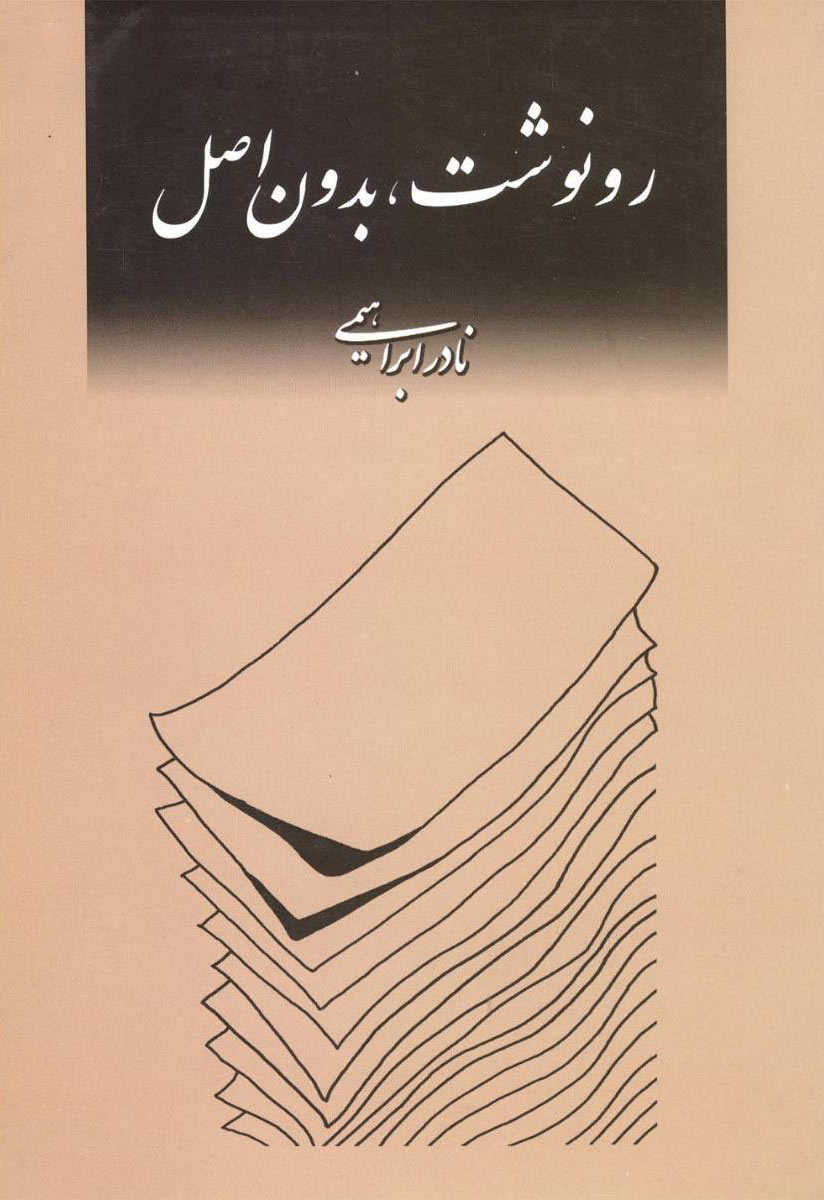
The book *”Copy, Without an Original”* by Nader Ebrahimi is a long story that is primarily narrated through inner dialogues and philosophical reflections. At the center of the narrative is a writer who is revisiting his relationship with his wife, Alisa. This relationship is revisited from its early stages of acquaintance, romantic enthusiasm, to their shared life together and its ups and downs. The writer tries to find meaning in this relationship by reflecting on his memories and thoughts—a relationship that is no longer what it was at the beginning. The writer, who is also the narrator, pays special attention to language and writing throughout the narrative. He is constantly writing, erasing, rewriting, and thinking about the “essence” of a relationship of which only a vague copy remains for him now. This concept of *”copy, without an original”* forms the core idea of the book: that people and their relationships change over time, and efforts to revert to their original form are often futile. The narrator questions not only his relationship with Alisa but also himself—whether he is still the same person he was when the relationship began. The prose of the book consciously diverges from traditional storytelling. The narrative resembles more of a stream of consciousness, in which recollections, unanswered questions, doubts, and incomplete sentences are placed side by side. Sometimes the story unfolds as real conversations, and other times as internal monologues. In this work, Ebrahimi uses symbolic descriptions, metaphorical language, and philosophically charged sentences, making the narrative resemble more of a personal reflection journal than a classic novel with clear conflicts and resolutions. The central themes of the book revolve around the mutability of human beings, solitude within close relationships, the difficulty of mutual understanding, and the gap that exists between words and the realities of life. Through the narrative, the idea emerges that what we know of others—or of ourselves—is always an incomplete version, conditioned by time and circumstances. As a result, no relationship can remain permanently based on a single “original”; rather, it is constantly in flux, changing and being rewritten—and perhaps this is what must be accepted.






Reviews
Clear filtersThere are no reviews yet.