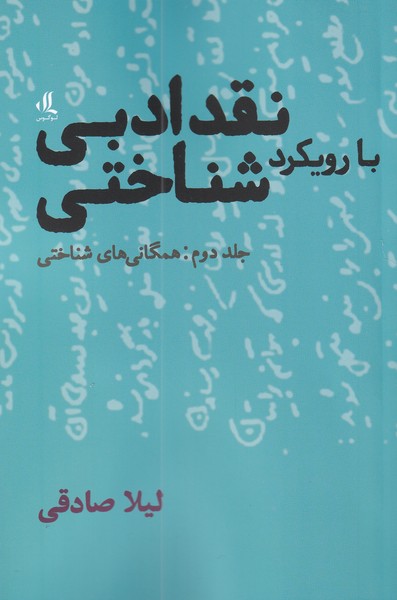
The book “Cognitive Literary Criticism (2)” by Leila Sadeghi, published by Logos, is an important original work in the field of literary criticism and its related theories, organized with a specific approach. Reading and interpreting literary texts lead to a better understanding of the text and allow humans, through interpretation, to confront the complexities of life within the text. This interpretation results in the self-awareness and broadening of the audience’s perspective; consequently, it reveals the inseparable link between literature and humanity. In fact, literary interpretation is considered a social action that expands the reader’s knowledge, focus, experience, and cognition. Therefore, literary criticism can be introduced as a domain of knowledge through which criteria linked to human nature are used to evaluate literary works. In this volume, efforts have been made to offer tools for literary criticism based on various factors that limit the conceptualization of humans. Through these tools, various literary works including poems by Forough Farrokhzad, Ahmad Shamlou, Yadollah Royaee, Reza Barahani, Sadegh Hedayat, Nima Youshij, Simin Daneshvar, Bijan Najdi, Ebrahim Golestan, and many others are examined. These cognitive tools, rooted in the structure of the human brain and its interaction with the environment, can also be employed in literary criticism to provide a human-centered critique and analyze and evaluate texts in different areas such as examining the universe of the text and the mental space of characters, the figurativeness or non-figurativeness of form and meaning, distinguishing poetic streams based on schemas, the difference between intertextuality and plagiarism, and more. In fact, these factors result in the formation of basic and universal concepts in human language and are used as tools in literary criticism, including embodiment, environment, experience, categorization, and perception. Since the topic of principles of perception requires more extensive discussion compared to other topics, it will be addressed separately in the third volume.







Reviews
Clear filtersThere are no reviews yet.