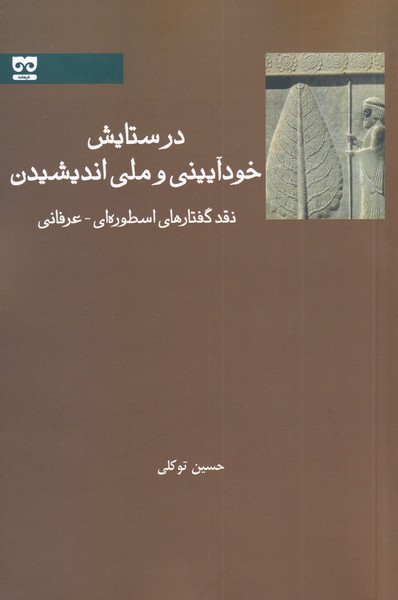
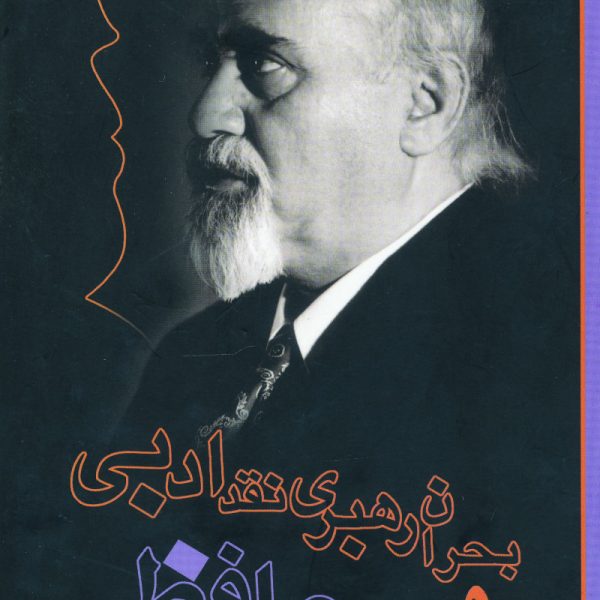
The expansion of mythical-mystical mental traits over the centuries has led to a fundamental rupture from historical, philosophical, and political thought, resulting in a stagnation in what Hegel called the “childhood of spirit.” In this study, various examples have been used to examine the manifestations of mythical-mystical discourses across history, society, and politics, as well as the reasons, methods, extent, and nature of their construction, analyzed through philosophical and literary theories. Some examples pertain to the background of mythical beliefs and mystical tradition, while others include political and social discourses of twentieth-century Iran that emerge within the hermeneutic cycle of representation in the “language” and “memory” of mythical-mystical concepts. Mythical-mystical discourses in diverse contexts often contain their answers within their questions. For instance, whenever “national thinking” is discussed, a historically evasive and fallacious tendency is to equate every “national” discourse with the ideology of nationalism and its nineteenth-century political-economic origins associated with the emergence of European nation-states in the medieval period. Then, by reducing it to banal contemporary politics and power struggles, efforts are made to strip it of any historical or philosophical meaning. This book addresses the antiquity of the “idea of Iran” as a complex historical-philosophical phenomenon which, supported by a rich and robust cultural foundation, has no connection with the simplifications of conditioned intellectuals and political activists, nor with the short-term European nationalism ideology. Thus, reducing it to political ideologies is impossible and only harmful and destructive. The European perspective on “Iran,” applying their theories to Iran’s history and society and equating it with political units in the geography of Western Asia, especially Iran, is simplistic, convenient, unproductive, and deceptive. Although some European scholars do not entirely believe every concept and representation of nationhood is a product of nineteenth-century nationalism, Eurocentrism remains a fundamental element in most analyses and historiographies, even when discussing countries with histories and experiences entirely different from Europe.



Reviews
Clear filtersThere are no reviews yet.