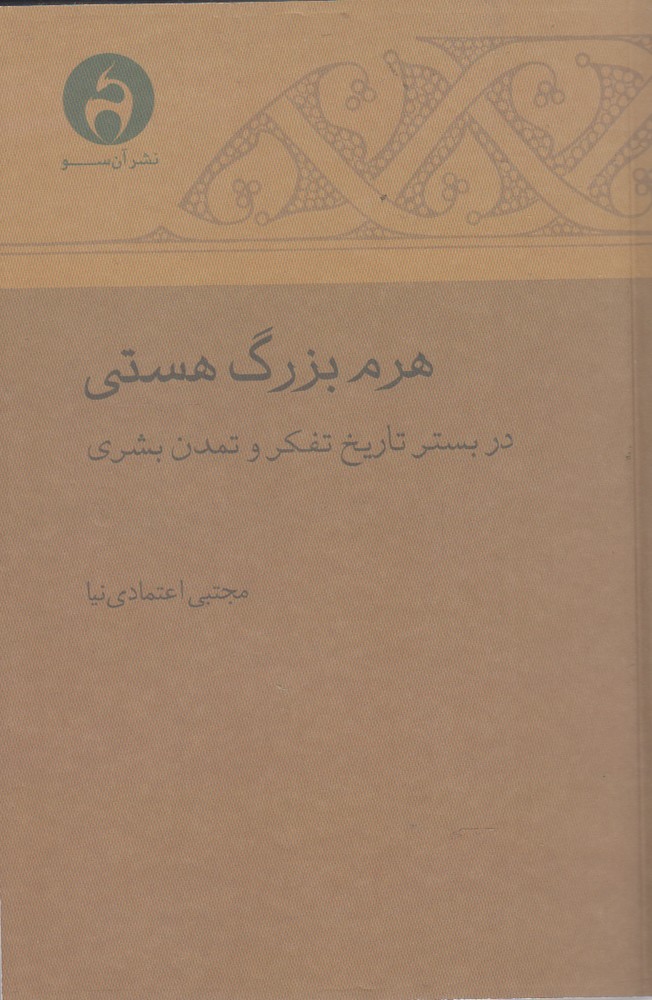
The Great Pyramid of Existence represents a type of hierarchical ontological schema that humans have consistently organized their views and actions around throughout centuries, adhering to its logical and psychological implications within culture and politics. The German philosopher Martin Heidegger believed that humans are the only beings who possess a world. Having a world means that humans must always consider the relationship between themselves and other beings. They strive to conceive the world they live in and the place of various entities within it in order to recognize their own position. Efforts by humans across different times and cultures to identify the world and humanity’s place in it have sometimes yielded similar results. The conception of the world as a pyramid or chain can be seen as one of these outcomes. This work demonstrates how thinkers across various historical and civilizational contexts have viewed the world similarly as a connected pyramid or chain. The author first briefly introduces diverse perceptions of the great pyramid of existence, then presents and analyzes the theories of Eastern thinkers (from ancient India and China), Western thinkers (from ancient Greece to the Middle Ages), and Islamic thinkers (Ibn Sina, Suhrawardi, and Mulla Sadra). This book can familiarize readers well with the geography and literature of the great pyramid of existence within the scope of philosophy and mysticism prevalent in the pre-modern world.









Reviews
Clear filtersThere are no reviews yet.